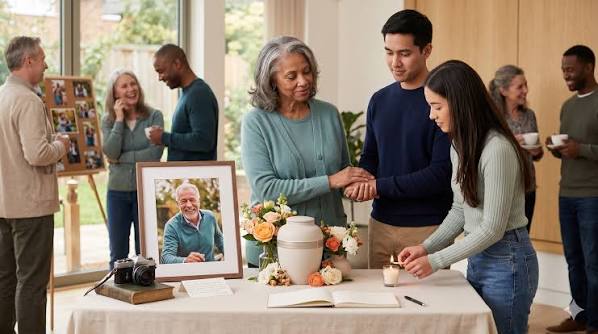

A memorial service after cremation can be built around the people who will gather and the person they want to remember. It may take place in a funeral home, a place of worship, a community room, or another suitable venue. The arrangement can be formal or familiar, provided the practical details support what the family wants to do.
Start by deciding what the gathering is for. Is it a chance for relatives to tell stories? A religious service? A quiet farewell before cemetery placement? A small meeting for people who could not attend earlier arrangements? A clear purpose helps you choose the setting and avoid adding activities simply because they appear in a standard program.
The container of cremated remains may be present, but it does not have to be the focus of every moment. Photographs, music, readings, and conversation can carry much of the remembrance. Plan the handling and placement carefully, then give the gathering room to feel like the person and family it belongs to.
Choose the tone before arranging the details
Ask the closest participants how they imagine the gathering. One person may picture a short service followed by a meal; another may expect a religious observance. Discuss those expectations before reserving a room or inviting speakers.
Use a few specific questions. Should there be a designated leader? Is the family comfortable with open sharing? Will the gathering include a burial or scattering afterward? The answers determine what needs to be organized and what can remain informal.
Consider the person’s own preferences when they are known. Someone who disliked public attention may be better remembered through a small gathering than a long sequence of speeches. Another person may have valued a particular faith tradition or community ceremony.
You do not need to force one mood throughout the event. A family can share laughter during a familiar story and still make space for quiet moments. The practical aim is to give guests a clear sense of what is happening without prescribing how they should feel.
Select a venue that supports the gathering
Ask the venue whether it permits a service with cremated remains present and what arrangements it requires. Confirm access times, room capacity, seating, and any restrictions on candles, flowers, music, or food. Get the details before designing a display.
Consider mobility and comfort. Check entrances, parking, restrooms, and the distance guests will need to walk. If older relatives or people with disabilities are attending, discuss their needs with them and the venue rather than assuming a photograph shows every practical issue.
Ask who provides the table, lectern, sound equipment, and any screen for photographs. A venue may include some items and expect the family to bring others. Assign those tasks explicitly so an important piece does not remain something everyone assumes will be there.
If the event is outdoors, make a workable alternative for weather and access problems. A symbolic setting is less useful if guests cannot reach it or hear the service. The backup can preserve the personal meaning without depending on ideal conditions.
Decide how the container will be present
Choose a stable surface with enough space for the container and any nearby objects. Check the table’s condition and position it away from crowded routes, doors, and equipment cables. The display should be visible without making the vessel easy to bump.
If you are still selecting the container, compare urns in relation to both the service and the plans afterward. A design suitable for a gathering still needs the right capacity and an appropriate closure. Its permanent destination may impose additional requirements.
Ask the funeral professional how the filled container will arrive and who will place it on the table. Identify the person responsible for taking it away afterward. These details should be arranged before guests arrive rather than settled during an emotional moment.
The family can also choose to hold the service without the remains present. A photograph, meaningful object, or simple empty space can provide a focus. That choice may be practical when travel or timing is complicated and should be explained only as much as the family wishes.
Build a short sequence that people can follow
A clear running order helps speakers and guests understand the gathering. It does not need to be elaborate or timed to the minute. A simple sequence might include:
- A welcome explaining how the gathering will proceed
- A reading, prayer, or piece of music chosen by the family
- Two or three prepared personal remembrances
- An optional opportunity for others to contribute
- Closing words and information about what happens next
Adapt that outline to the family’s tradition and purpose. If a faith leader or celebrant is involved, discuss the structure with them. They may have requirements or suggestions that affect the order of events.
Avoid placing every available idea into the program. A long slideshow, several readings, open sharing, and multiple musical selections can become more than the family intended. Choose the elements that have a reason to be there and leave time for people to speak naturally.
Give one person responsibility for guiding transitions. That person can introduce speakers, explain a change, and bring the formal part to a close. Clear guidance is especially useful when guests are unfamiliar with one another or with the chosen form of service.
Ask speakers for specific memories
When inviting someone to speak, offer a useful prompt. Ask for a story about working with the person, a familiar habit, or a moment that captures their character. Specific memories are often easier to prepare than a request to summarize an entire life.
Tell speakers approximately how much time is available and whether someone else is covering the same period or relationship. This helps prevent several people from repeating the same biographical details. It also gives a nervous speaker a manageable task.
Offer an alternative to speaking aloud. A relative can write a memory for the leader to read or contribute it to a booklet. Someone who prefers not to speak publicly should not have to choose between participation and discomfort.
If open sharing is planned, explain how it will work. A leader can invite a few brief contributions and close the section respectfully when needed. The family should decide in advance whether that format feels appropriate rather than leaving the microphone open by default.
Use photographs and music with restraint
Choose photographs that show different parts of the person’s life and relationships. Check names and dates if captions are included. Ask close family members about images that could feel unexpectedly private or upsetting in a public setting.
Test the slideshow and sound equipment before the gathering. Keep a backup copy on a separate device or storage method that the venue can use. Make sure someone other than the person leading the service knows how to start and stop the presentation.
Music can create a personal connection, but consider how it fits the room and the moment. A familiar song may be suitable during arrival or while photographs are shown, while a quiet instrumental piece may suit a pause. Ask the venue about any playback or licensing arrangements relevant to the event.
Avoid making the entire gathering depend on technology. A few printed photographs and a prepared reading can still support the service if a screen or speaker fails. The backup should be simple enough that someone can use it without interrupting the event for troubleshooting.
Include people joining from a distance
Ask relatives who cannot attend whether they would like to contribute a message or join remotely. A short recorded memory can be easier to manage than a live connection across time zones. Confirm that the person is comfortable with how their contribution will be shared.
If the event will be streamed or recorded, tell attendees in advance and decide which parts will be included. A family may want the prepared service recorded while keeping the informal conversation afterward private. Place the camera accordingly.
Test the connection from the actual venue and check whether remote guests will be able to hear. A clear audio recording is often more useful than a distant image with muffled speech. Assign the technology task to someone who can focus on it.
Share the joining instructions and time zone clearly. After the service, provide the agreed recording or photographs to those who requested them. Keep access consistent with the family’s privacy preferences rather than automatically posting the event publicly.
Plan the transition after the formal service
Tell guests what will happen next. There may be a meal, a cemetery visit, a private family gathering, or no additional event. Clear information prevents people from waiting uncertainly or following a procession they were not meant to join.
If burial or scattering is planned, confirm the permissions and practical arrangements separately. A memorial service venue’s approval does not establish permission for another activity elsewhere. Give participants the correct address, timing, and access information.
Choose who will collect photographs, flowers, programs, and equipment. The person responsible for the container should be able to focus on that task without also packing the entire room. A written cleanup list can be brief and still prevent confusion.
Arrange a quiet handover of the container at the end. Confirm its destination and who will carry it. The final moments of a gathering are a poor time to discover that every relative assumed someone else had made that plan.
Keep a small record of what was shared
Save the program, selected photographs, and any written memories the contributors agree to preserve. A family member who was unable to attend may appreciate them later. Record who told a story so its origin remains clear.
There is no need to document every moment. Some parts of the gathering can remain private and unrecorded. Let the family decide what should be kept and who should receive it.
The service has done its work when people have had an understandable, welcoming opportunity to remember. A suitable setting, a few personal choices, and careful handling of the remains provide the practical foundation. The stories and relationships give the gathering its character.